
homeohope@drmaheshchandrakandpal.com
Cancer: What Nobody Tells You Until It’s Too Late
Post ByDr. Mahesh Chandra Kandpal
My neighbor was 47 when she found the lump. She had been ignoring a mild discomfort in her breast for almost three months, telling herself it was probably just hormonal, probably nothing. By the time she sat in the oncologist’s office, the cancer had already spread to two lymph nodes.
She told me later, “I just didn’t want to know.” And honestly? Most of us understand that feeling.
Cancer is one of those words that changes the temperature of a room the moment it’s spoken. It carries weight unlike almost any other diagnosis — partly because of what it means medically, and partly because of what it means to the people sitting in those waiting rooms, clutching paper cups of cold coffee, scrolling through their phones but not really reading anything.
This article isn’t going to throw a wall of statistics at you. There’s plenty of that online. Instead, let’s talk about cancer the way people actually need to hear it — plainly, honestly, and without the clinical distance that makes it feel like it’s always happening to someone else.
What Cancer Actually Is (Without the Textbook Tone)
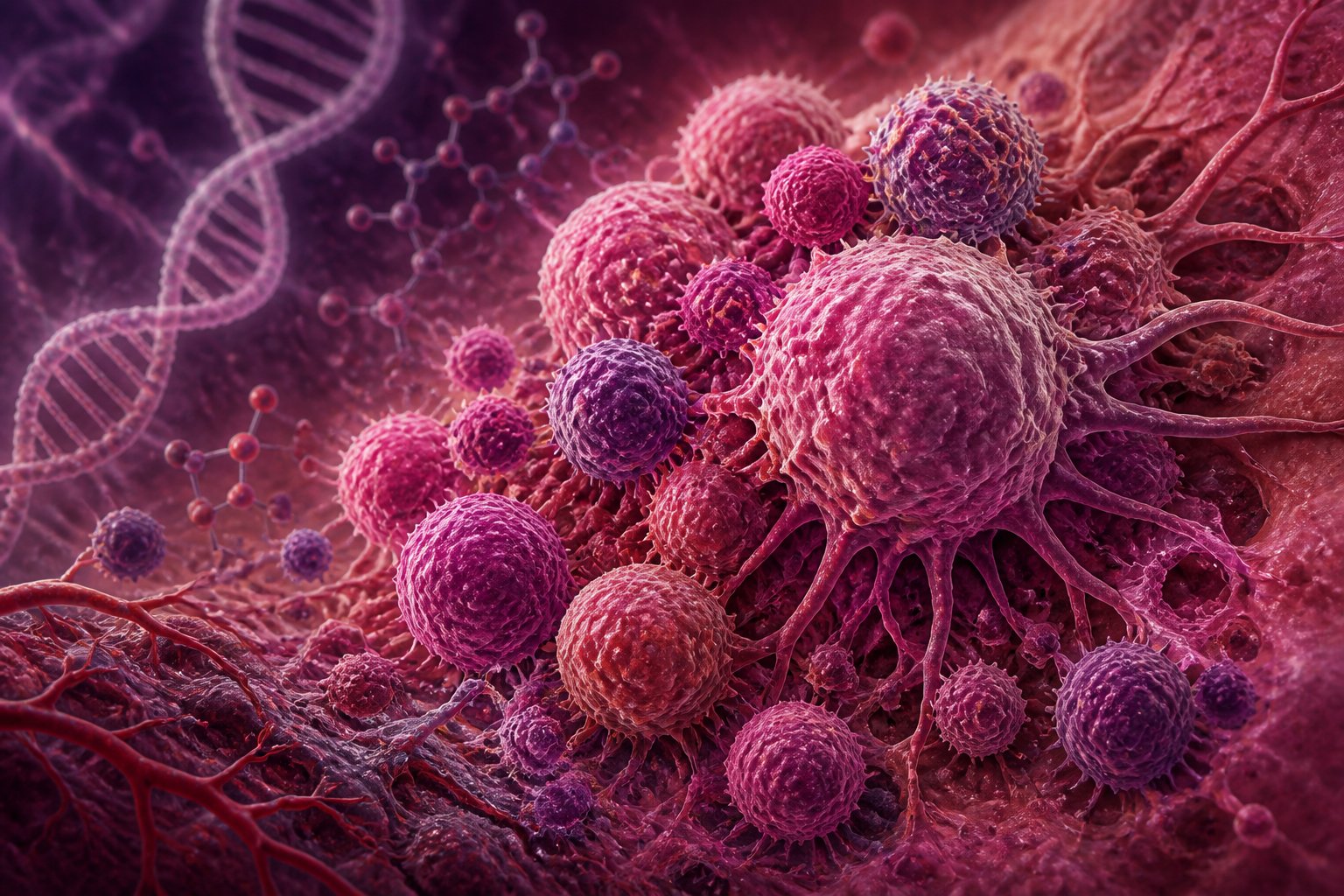
At its core, cancer is a failure of communication within the body. Our cells are supposed to grow, do their job, and die in an orderly cycle. Cancer happens when something disrupts that cycle — a mutation, usually — and certain cells start growing without following the rules. They divide uncontrollably, they don’t die when they’re supposed to, and over time they form masses or invade tissue where they don’t belong.
What makes cancer so complicated — and so difficult to treat — is that it’s not one disease. It’s more like an umbrella term for over 200 different conditions, each with its own behavior, its own triggers, and its own set of responses to treatment. Breast cancer behaves differently from lung cancer. Leukemia is nothing like melanoma. Calling them all “cancer” is a bit like calling every storm “weather” — technically true, but not nearly specific enough.
Why Some People Get It and Others Don’t
This is the question that haunts people most, and it deserves an honest answer: we don’t fully know.
What we do know is that cancer is driven by a combination of genetic factors, lifestyle choices, environmental exposures, and sometimes just extraordinarily bad luck. Some people smoke for decades and never develop lung cancer. Others who have never touched a cigarette get diagnosed at 35. That unfairness is real, and it’s worth acknowledging.
That said, certain risk factors are well-established:
Tobacco use remains the single largest preventable cause of cancer worldwide. It’s linked not just to lung cancer but to cancers of the mouth, throat, esophagus, stomach, kidney, and bladder.
Diet and obesity play a bigger role than most people realize. Excess body fat produces hormones and inflammatory compounds that can encourage tumor growth. Diets high in processed meat have been directly associated with colorectal cancer.
Chronic infections — particularly HPV, Hepatitis B and C, and H. pylori — are responsible for a significant portion of cancers globally. This is one of the reasons vaccines against HPV have been such a meaningful public health advancement.
Prolonged sun exposure without protection raises the risk of skin cancers, including the deadliest form, melanoma.
Family history matters too. Carrying mutations in certain genes — like BRCA1 or BRCA2 — can substantially increase a person’s lifetime risk of breast and ovarian cancers.
But again: having risk factors doesn’t guarantee cancer, and lacking them doesn’t mean you’re immune. This is what makes prevention a matter of reducing risk rather than eliminating it entirely.
The Early Signs People Miss
One of the most tragic aspects of cancer is how quietly it often begins. Many early-stage cancers produce no pain, no dramatic symptoms — just subtle changes that are easy to rationalize away.
Here are signs that genuinely warrant medical attention, even when they seem minor:
- A lump or thickening in the breast, testicle, lymph node, or anywhere beneath the skin
- Unexplained weight loss — losing 10 pounds or more without trying is not a compliment your body is giving you
- Persistent fatigue that doesn’t improve with rest
- A sore or wound that won’t heal
- Unusual bleeding — from the gums, in urine, in stool, or between periods
- A cough or hoarseness that lingers for more than three weeks
- Changes in a mole — size, shape, color, or if it starts to bleed
None of these symptoms definitively mean cancer. Most of the time, they don’t. But they’re the body’s way of raising its hand, and they deserve to be taken seriously.
What Treatment Actually Looks Like Today
The word “chemotherapy” still triggers fear in most people — and understandably so. But cancer treatment in 2025 looks remarkably different from even a decade ago.
Surgery remains central for many solid tumors and, in early stages, can be curative on its own.
Radiation therapy has become increasingly targeted, allowing oncologists to deliver high doses of radiation to tumors while largely sparing surrounding healthy tissue.
Chemotherapy is still used, but often more strategically — in shorter cycles, in combination with newer drugs, or as a precaution after surgery rather than a primary treatment.
Immunotherapy is perhaps the most exciting development of the last decade. Rather than attacking cancer directly, it helps the patient’s own immune system recognize and destroy cancer cells. For certain cancers — melanoma and lung cancer, notably — it has produced survival outcomes that were unthinkable fifteen years ago.
Targeted therapies work by blocking specific molecular changes that drive certain cancers. These drugs are far more precise than traditional chemotherapy and often come with fewer side effects.
Hormone therapies are used for cancers that are fueled by hormones, particularly some breast and prostate cancers.
The direction of treatment is unmistakably toward personalization. Rather than a one-size-fits-all protocol, oncologists increasingly tailor treatment to the specific molecular profile of a patient’s tumor. This is what “precision medicine” actually means in practice.
The Emotional Weight Nobody Prepares You For
A cancer diagnosis doesn’t just happen to a body. It happens to a person — their relationships, their identity, their sense of the future.
Anxiety and depression are extraordinarily common among cancer patients, yet they remain undertreated. Many patients feel pressure to stay positive, to be brave, to not burden the people around them. That pressure is exhausting and often counterproductive.
Palliative care — care focused on quality of life and symptom management — has historically been associated with end-of-life situations. But there’s growing recognition that it should be integrated from diagnosis onward, not as a concession that treatment has failed, but as an acknowledgment that a person’s comfort and mental wellbeing matter at every stage.
The One Thing Worth Holding Onto
Survival rates have improved substantially across nearly every type of cancer over the past three decades. More people are living through cancer diagnoses today than at any point in history. Many of them go on to live full, long lives.
That progress is not accidental. It’s the result of earlier detection, better treatments, and — critically — people who refused to rationalize away symptoms and went to see a doctor.
You don’t have to become a health expert. You just have to pay attention to your own body and take it seriously when something changes.
That’s it. That’s the whole argument.
Go get the checkup you’ve been putting off.
