
homeohope@drmaheshchandrakandpal.com
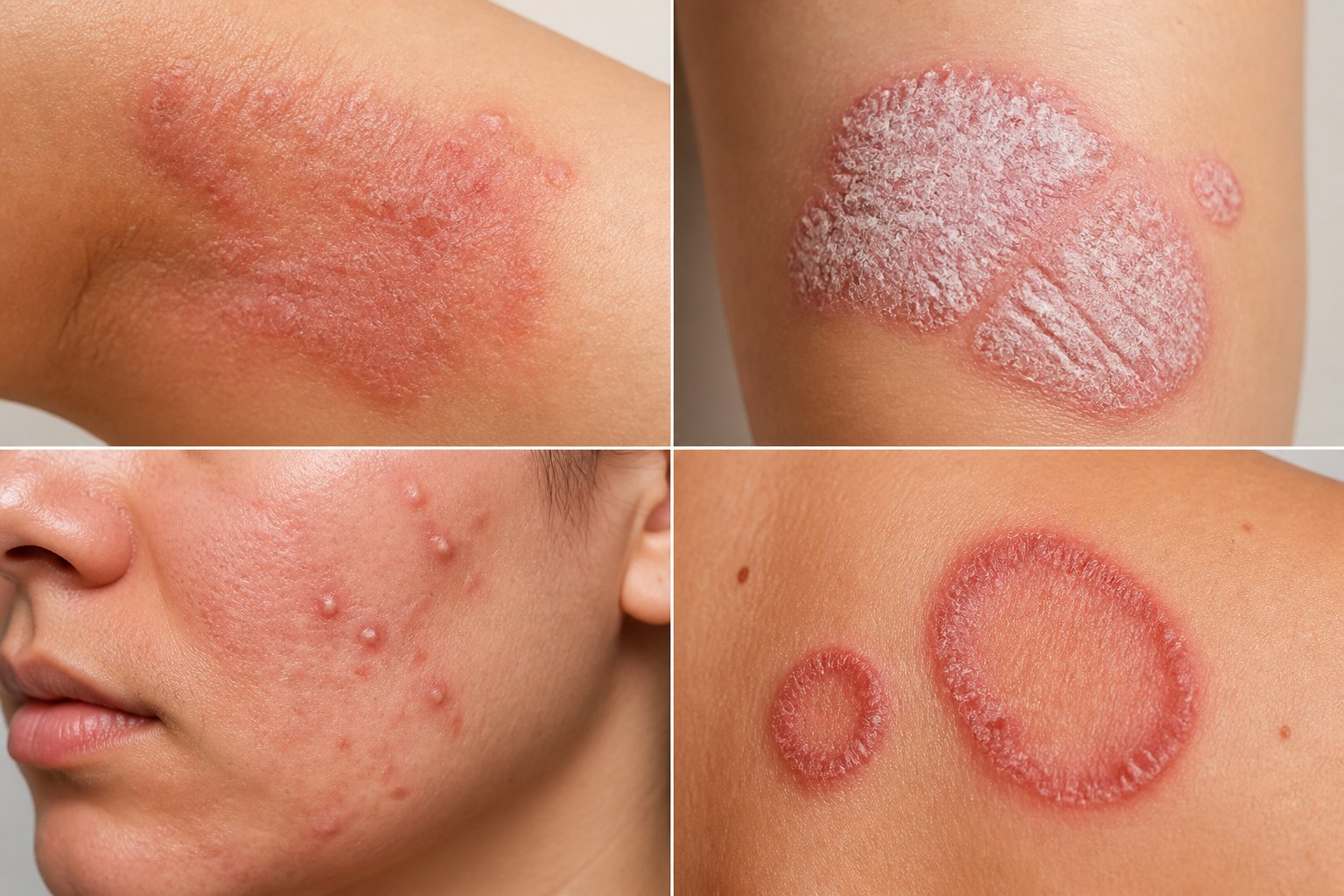
Skin Disease: The Health Problem We See Every Day But Rarely Talk About
Post ByDr. Mahesh Chandra Kandpal
My cousin has had psoriasis since she was nineteen. For years, she wore full sleeves in summer, declined pool invitations, and rehearsed explanations in her head before anyone could ask about the patches on her arms. “It’s not contagious,” she’d say, almost apologetically, before the other person had even opened their mouth.
That’s the thing about skin disease. It lives on the outside, in full view of the world, and yet it’s one of the most misunderstood, stigmatized, and undertreated categories of health conditions we have. People assume it’s about hygiene. They assume it’s superficial. They assume it’s the kind of thing you just deal with.
They’re wrong on all counts.
Skin disease affects more than 1.8 billion people globally at any given time. That’s not a typo. It is the most common reason people visit a primary care doctor in many countries, and yet dermatology remains one of the most under-resourced specialties in healthcare. Entire communities — particularly in lower-income countries — go without access to a single trained dermatologist.
This article is about understanding skin disease in a way that actually respects the people living with it.
The Skin Is Not Just a Wrapper
Before talking about what goes wrong, it helps to appreciate what the skin actually does when it’s working well.
Your skin is the largest organ in the body — roughly 1.5 to 2 square meters of living tissue. It is simultaneously a physical barrier, an immune organ, a temperature regulator, a sensory surface, and a site of vitamin D production. It keeps microbes out, retains moisture, and communicates signals to the rest of the body through a dense network of nerve endings.
When the skin is diseased, that entire system is disrupted. The barrier breaks down. Moisture escapes. Immune signals go haywire. Nerve sensitivity changes. What looks like a rash on the surface is often a much more complicated breakdown happening in layers you can’t see.
This is why treating skin conditions as purely cosmetic misses the point entirely.
The Most Common Skin Conditions — And What’s Really Happening
Eczema (Atopic Dermatitis)
Eczema is one of the most common chronic skin conditions in the world, affecting children and adults alike. At its core, it’s a problem with the skin’s protective barrier. In people with eczema, the skin is less effective at holding in moisture and keeping out irritants, which leads to dry, itchy, inflamed patches that can crack, weep, and become infected.
It’s not an allergy, exactly, though allergic responses often make it worse. It’s not caused by poor hygiene. It runs in families, and it frequently shows up alongside asthma and hay fever — a triad that doctors call “the atopic march.”
For many children, eczema improves with age. For others, it becomes a lifelong condition that flares unpredictably, disrupts sleep, affects concentration, and causes significant emotional distress.
Psoriasis
Psoriasis is an autoimmune condition. The immune system, for reasons that aren’t entirely understood, begins attacking skin cells, causing them to regenerate far too quickly. Normally, skin cells complete their life cycle in about a month. In psoriasis, that process is compressed to just three or four days — and the cells pile up on the surface, forming the thick, silvery, scaly plaques that are the condition’s hallmark.
Psoriasis is not just a skin disease. About 30% of people with psoriasis develop psoriatic arthritis, a painful inflammatory joint condition. People with psoriasis also have higher rates of cardiovascular disease, depression, and metabolic syndrome. It is, in every meaningful sense, a systemic disease that happens to show up on the skin.
Acne
Acne is so common — especially in adolescence — that people rarely take it seriously as a medical condition. But severe acne causes lasting physical scars and, just as significantly, deep psychological ones. Studies consistently show that acne is associated with higher rates of depression, social anxiety, and reduced self-esteem, even when the severity appears moderate by clinical measures.
Acne forms when hair follicles become clogged with oil and dead skin cells. The bacterium Cutibacterium acnes thrives in this environment and triggers an inflammatory response. Hormonal shifts — during puberty, menstruation, pregnancy, or stress — accelerate oil production and make flares more likely.
The idea that acne is caused by eating chocolate or not washing your face is largely a myth that has persisted far past its expiry date.
Fungal Infections
Conditions like ringworm, athlete’s foot, and nail fungus are caused by dermatophytes — fungi that feed on keratin, the protein that makes up the outer layers of skin, hair, and nails. They thrive in warm, moist environments, which is why gyms, swimming pools, and shared footwear are common sources of transmission.
Fungal infections are highly treatable but frequently underdiagnosed, particularly in darker skin tones where visual presentations can look different from the way they’re depicted in most medical textbooks — a well-documented gap in dermatological training.
Vitiligo
Vitiligo occurs when the immune system destroys melanocytes — the cells responsible for producing skin pigment. The result is patches of skin that lose their color entirely. Vitiligo is not painful, not contagious, and not dangerous. But in cultures where even skin tone carries social meaning, it can be profoundly isolating.
People with vitiligo often describe spending years searching for a cause, a cure, or at least an explanation before accepting that neither may come easily. The psychological burden is real and frequently unaddressed.
Why Skin Disease Hits Differently on Darker Skin
This deserves its own section because it is a genuine, systemic problem.
Medical education has historically used light-skinned patients as the default reference point for teaching skin disease. The result is that many conditions — eczema, psoriasis, lupus, fungal infections — present visually differently on brown and Black skin, and those presentations are underrepresented in textbooks, clinical training, and AI diagnostic tools.
Redness, for instance, is easy to spot on pale skin. On darker skin, inflammation often shows up as a darkening or a purplish tint rather than red — a difference that leads to misdiagnosis or delayed diagnosis with troubling frequency.
This isn’t a minor footnote. It’s a structural gap in how medicine has been taught and practiced, and it directly affects patient outcomes.
Sun, Skincare, and the Advice Worth Actually Following
For all the noise around skincare — the serums, the acids, the 12-step routines — the single most evidence-backed intervention for skin health is also the most boring: sunscreen.
Ultraviolet radiation from the sun is responsible for the vast majority of skin cancers, including melanoma, basal cell carcinoma, and squamous cell carcinoma. It also accelerates visible aging, damages the skin’s barrier function, and worsens several inflammatory conditions.
Broad-spectrum SPF 30 or higher, applied daily — not just at the beach — is genuinely the most protective thing most people can do for their skin. And yes, this applies to people with darker skin tones too, who are at lower risk of sun-induced skin cancer but are not immune to it, and who remain vulnerable to sun-triggered hyperpigmentation and other damage.
Beyond sun protection:
- Moisturize consistently, especially after bathing, to support the skin’s barrier
- Avoid harsh soaps and hot showers, which strip natural oils
- Don’t pick or squeeze — it turns minor inflammation into scarring
- See a dermatologist for anything that changes in appearance, bleeds unexpectedly, or doesn’t resolve within a few weeks
The Part That Doesn’t Show Up in Lab Results
Living with a visible skin condition affects how people move through the world. It shapes what they wear, where they go, how they feel when someone’s gaze lingers a second too long. The psychological dimension of skin disease is real, it’s measurable, and it’s consistently undertreated.
In one study, people with moderate-to-severe psoriasis reported quality-of-life impacts comparable to those experienced by people with diabetes or heart disease. That comparison surprises people. It shouldn’t.
If you’re living with a chronic skin condition and struggling emotionally, that’s not weakness or vanity. It’s a reasonable response to something that affects your daily life in ways most people around you can’t fully see.
A Final Word
Skin disease is not a minor category of medicine. It touches hundreds of millions of people, carries real physical and emotional weight, and deserves to be talked about without embarrassment or dismissal.
If something on your skin has changed, persisted, or is affecting your life — you don’t have to manage it alone, and you don’t have to simply live with it. There are more effective treatments available today than at any point in history.
The first step is taking your own skin seriously enough to ask for help.
